Book reviews
Labelled a Black Villain: and Understanding the Social Deprivation Mindset. By Trevor Hercules. Reviewer: Rod Earle
User Rating: 5 / 5

- Details
- Parent Category: Reviews
- Category: Book Reviews
- Last Updated: Wednesday, 02 September 2020 13:46
- Published: Sunday, 14 June 2020 19:06
- Written by Rod Earle
- Hits: 2712

Labelled a Black Villain: and Understanding the Social Deprivation Mindset. By Trevor Hercules, (Waterside Press, 232 pp.) ISBN 9781909976696, £19.95.
For much of the first decade of the 21st century, people working in criminal justice were encouraged to take an ‘evidence-based’ approach. Heavily pushed in New Labour's reforms of the youth justice system, its fortunes have declined as evidence-based practice produced evidence of unintended consequences. These included vast numbers of young people being sucked into an increasingly muscular and punitive youth justice system. Many of them ended up locked up. Too many of them were black.
In the political confusion that followed the deflation of New Labour’s neo-liberal project (precipitated by the 2007/8 banking crisis) the focus on ‘What Works’ has been replaced by something closer to an indifferent ‘What Ever’. The political instincts of Conservatism that replaced New Labour have never been propelled by an interest in evidence and into the gaps vacated by the collapse of faith in evidence-based practice has strolled ‘experience-based practice’. Trevor Hercules is an advocate of this and his experiences couldn’t be more vital even if there is little compelling evidence that they can do more than provide him with a means of making a valuable contribution to society by helping some young people avoid the worst that society can throw at them. And there’s no harm in that.
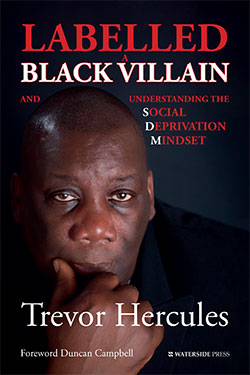
Trevor’s book offers rich insights into prison life, police practice and black lives when that really matters. As the police killing of George Floyd and other events in the USA rekindle radical anti-racist activism, his account of doing seven years and more in prison during the 1970s and 1990s when police racism was as routine as it was widely denied, is invaluable. As vivid and disturbing as his first-hand account is, it is made all the more compelling by his assertion at the beginning of the book that “Prisons in Britain are far worse places than they were when I was there”.
If you’ve never been in prison or read Mike Fitzgerald’s Prisoners In Revolt you may not realise just how chilling that remark is. The bulk of Hercules account of his seven years inside corresponds roughly with the period covered in Fitzgerald’s book, the 1970s. Hercules is a key figure in an insurrection at HMP Gartree that Fitzgerald’s group, Protection of the Rights of Prisoners (PROP) had supported. His description of those events come close to the end of the first section of his book and form the first hint of his turn towards self-rehabilitation. He is eventually released from that sentence in 1981. Although he is candid about his later return to prison to serve other sentences, his first experiences are what this book is about.

He was released from his prison a year before I was sent to mine and although our two experiences of life and imprisonment are very different, there was much in his book that struck a chord. We are not much different in age, but my imprisonment was short and singular. His was long and repeated. I am white, he is black. We have both worked with young people to help keep them out of trouble and find better lives for themselves. There were points of connection that snapped across the differences that divide our biographies; my background white and middle-class, his working class and black, his descriptions of slopping out, his encounters with black radical politics, his respect for political perspectives and wise counsel offered by Irish republican prisoners in British jails about the political nature of his personal predicaments as a black prisoner in a white man’s system.
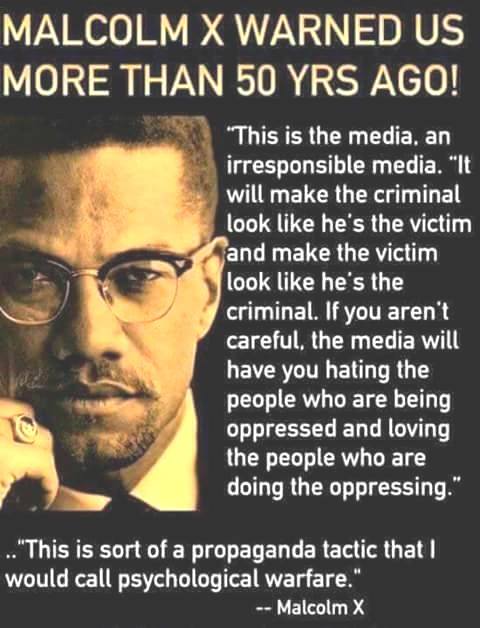
If the slogan Black Lives Matter means anything it means that white people need to read books like this about lives not like theirs. Hercules makes repeated reference to the black consciousness movements of the 1960s and 70s and its well-known advocates in the form of George Jackson and Angela Davis. This, to me, is one of the least satisfying parts of the book because although he says in describing his ‘Rebellion’ phase, “We need to breed our own Angela Davises, Malcolm Xs, George Jacksons, Huey P Newton, Eldridge Cleavers, Rap Browns…” he rarely speaks of their work in detail or of the collective political structures and activists that emerged in the UK in organisations like Race Today and the Institute of Race Relations. However, as he readily concedes his activities remained more toward the criminal end of the political spectrum than the revolutionary and it is no basis to dismiss the force of his testimony. This book cannot claim to be up there with George Jackson’s Soledad Brother in the pantheon of black prison literature, but it deserves it’s place in the canon of autodidact black radicalism (Johnson and Lubin 2017).
The book closes with a turn toward theory and outlines Hercules attempt to synthesise his experiences of growing up in Britain where endemic racism structured his life opportunities and personal horizons. He adopts the acronym SDM as a shorthand for his ideas about how social deprivation and structural alienation are internalised by today’s young black people in a ‘mindset’ that propels them down the pathways he describes himself travelling in the first part of the book. ‘Understanding the Social Deprivation Mindset’ is the subtitle of the book and the programme of intervention he has designed for work with young people at risk of making a life like his own. Criminologists will identify in Hercules' work an original formulation of Loic Wacquant’s work on advanced marginality. They will recognise the ‘deadly symbiosis’ of ghetto and prison life he draws in painful personal detail and they will see how SDM implicitly refers to Pierre Bourdieu’s concepts of habitus and field.
At one stage in his prison life, Hercules began an Open University course in social science but it was disrupted by a prison move. He ruefully remarks as he sets out his SDM framework that he has heard of something called ‘convict criminology’ and speculates on whether his blend of personal experience and critical analysis qualifies him as one. In many ways it does, but as someone who works for The Open University and labours under the label of convict criminology (Earle and Davies 2020), I wish he had been able to pursue his studies. Perhaps he will and the 30 pages dedicated to theory and action at the end of the book will be expanded in his next book to adequately complement the depth of experience he brings to the subject.
Hercules mentions the pivotal role of the white Conservative MP Justine Greening in endorsing and enabling his approach. Given the social wreckage that Conservative governments have visited on the criminal justice system and black communities, I would counsel wariness about the value of placing any faith in such personal encouragement. I do not doubt the good intentions of Ms Greening but the favours within her gift are as much a part of the problem as SDMs may be among black communities.
References
Earle, R. and Davies, W. (2020) "Glimpses across 50 years of prison life from members of British Convict Criminology", Prison Service Journal 50th anniversary issue (forthcoming)
Fitzgerald, M. (1977) Prisoners in Revolt. Harmondsworth Penguin.
Johnson, G. and Lubin, A. (2017) The Futures of Black Radicalism, London. Verso
Wacquant, L. (2007) Urban Outcasts: A Comparative Study of Advanced Marginality, Cambridge. Polity.
Reviewer: Dr Rod Earle is a Senior Lecturer in the School of Health, Wellbeing and Social Care at The Open University. He is the author of Convict Criminology - Inside and Out, 2016, Policy Press.
