Editor's Blog
Malice in wonderland 1: Brexit and development in reverse
User Rating: 5 / 5

- Details
- Category: Editor's blog
- Last Updated: Wednesday, 03 June 2026 17:45
- Published: Tuesday, 07 July 2020 14:12
- Written by Colin Sumner
- Hits: 2864

Criminology rarely explains or explores in depth the criminal behaviour of our ruling classes ( but see inter alia Hagan 2012), and we hardly ever try to understand why working-class people vote for incompetents, crooks, liars and corrupts. Yet the state is surely at the heart of any criminology? Some thought we had left eighteenth century corruption and amateurism behind with the age of technocratic administration, yet our present Westminster government have made many wonder what land or time we now live in, some who voted them in are now dead. Some think the Left is as bad as the Right and the Middle, and trust no politician at all. This long essay will explore [1] the inherent malice in the lethal fantasy world constructed by the UK's very Conservative government and how it has conned a disillusioned, depressed and deluded electorate; [2] the idea that this electorate has adopted irreverent self-harming as its only hope of regaining control. It is an exploration of a callous state based on lies, petty cynicism, little hegemony, no national pride, rapidly declining popularity and minimal ethics, accumulating wealth for its leaders and backers, and increasingly outside the rule of law. 'One law for them and another for us' has become the new normal. The ramifications for criminology, in theory and practice, are many; all I aim to do here is open up a seminal research framework for future studies of failing states.
A criminology 'through the looking-glass' (see Sumner 2017, Moxon 2020, and of course Carroll 1871) sees globally and historically, and wants to learn from history not rewrite it, to look beneath the surface, and to discover what embracing the world of the black kitten can teach us about the world of the 'White Queen' who, if you remember, remembers future events before they take place. She knows the script because she wrote it a long time ago. I see an upside-down world in reverse order: thieves, who once stole the land, created a new political settlement and established the banks, now rule the planet and claim they are actually the victims of our crimes and sins today. They then violently outlaw any resistance to their lies and hypocrisy. Their crimes have victimised us for hundreds of years, as they starved, brutalized and suppressed on a global scale, ruling without the rule of law when it suited them, as in colonialism or 'emergencies' or pandemics or environmental disasters, sustaining many an intergenerational trauma amongst vulnerable families. Yet some still doff their forelocks, fear agencies of collective resistance, believe the billionaires' newspapers and dismiss ruling-class crimes as whispers from the past or the figments of our imaginations.
My work in criminology reflects on the facts that the crime-society relationship is a two-way street and that crime categories are two-sided entities, part label and part reality. Crimes cause or found societies, historically, and shape a country's economy, politics and culture, just as much as society causes today's crime and social problems. Colonialism is deeply embedded in our everyday prejudices and perspectives. Listening to the White Queen, this side of the looking-glass, we could be deceived into thinking that it is in the past and dismiss it as 'history'. Whereas, if we actually go through the looking-glass, joining other black cats and other supposedly mysterious figures, such as gay lions and damaged unicorns, and actually read history, we discover that it is embedded in the present. We may discover the stuff of black cat criminology.
Many today now see that and that society not only exists as a real, powerful thing pushing people into risking bad behaviour or crime but also that the criminal behaviour, social deviance and very juvenile delinquency by our rulers create and recreate that society, and are part of the very history and fabric of power. That is the parody in taking the knee in the post-George Floyd era. That is the disgust in seeing politicians feather their private nests through their public office.
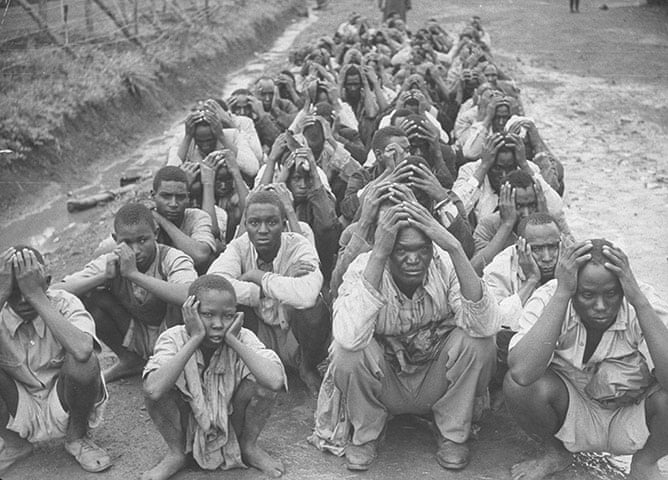
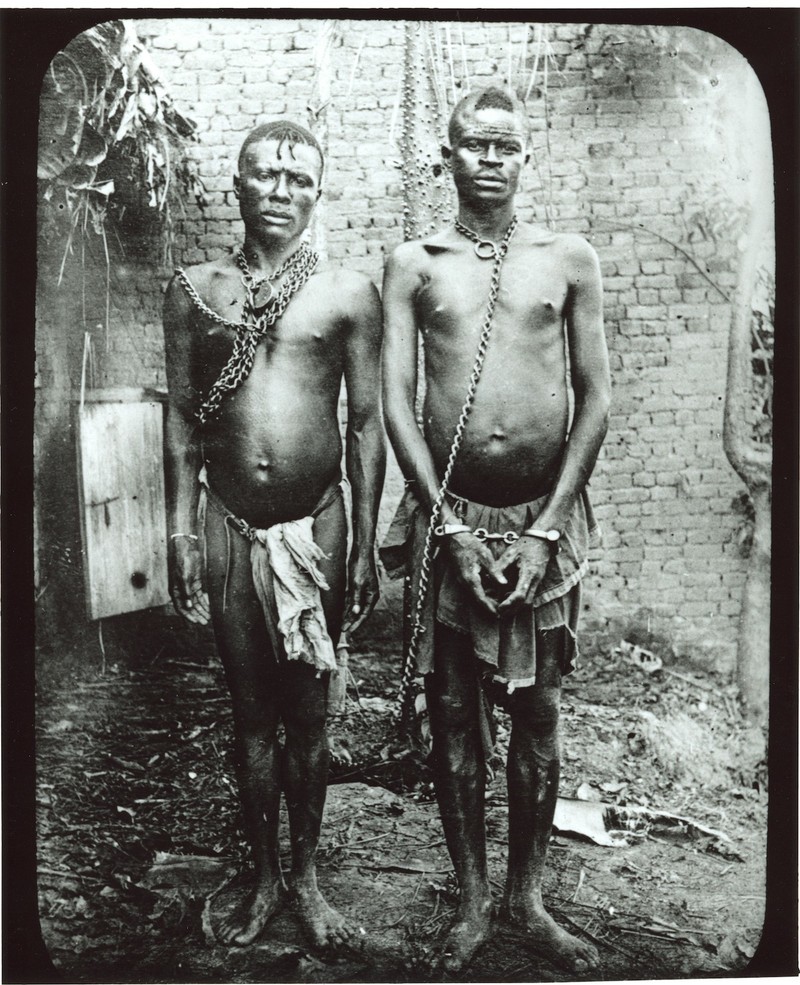 The rich and powerful have blood on their hands, everywhere. They were paid off handsomely for letting their slaves go, and they kept their land.
We are not in the mood to tolerate their randomized violence against us, their historic victims, any longer. The ruling classes have so much power in the present that they can re-write 'history (theirs and ours), demand that we protect 'history' (theirs, that is) yet at the same time denigrate our history, our lived experience, our sociology.
We know no-one cannot turn back time; but our suffering and anger, our constant discovery of past violations, does not abate so we demand that the memorials glorifying the power of the capitalists and their exploitation of the public be reduced, taken from public view or destroyed. Memorials to mass murderers and extortionists are not welcome in public; times have changed, we object - George Floyd's was one police killing too many and not just in America and not just by police. We can't breathe.
We can learn from all human histories to empower ourselves because, for sure, the rulers will suppress a history that recognizes and empowers our struggles. A black footballer for Manchester United and England, Marcus Rashford, changed government policy this week, now to deliver school lunches to very poor people this summer, drawing articulately and skilfully on his own personal experience of single-parent poverty. Myself, also brought up (in my teens) by an amazing single mother, with regular visits to the Stretford End to watch Georgie, I became the sociology lecturer at Cambridge University's Institute of Criminology 1977-95, and introduced the first global-historical component into the MPhil. in Criminology, with the encouragement of Sir Leon Radzinowicz and Professor Manual Lopez-Rey, in 1978 with my course on Crime and Justice in the Third World, focussing on colonialism and dictatorship. I later organized and got funding for an international conference on crime and underdevelopment (see Sumner 1982); work that the UN supported in its fight to combat unequal development on a global scale. Yes, we can.
But why do people tolerate oppression for so long? Or do they? Is it just our rulers' superior firepower and inhumanity? Why do subordinates comply for so long, thinking of centuries of slavery in Zanzibar, and why, when they rebel for a better future, do they often rebel using archaic ideas or images of a 'golden age' or a messiah? People, as both Marx and John Lennon noted, can only change the world in terms of the ideas and culture they inhabit. It's not enough to carry a little red book and pictures of Chairman Mao, or indeed to be Mao or Lenin, or Putin or Al-Khameini. A reversion to archaic ideas is common to Johnson, Trump, Islamic State and the Taliban. We will see later that studies of the social psychology of suicide bombers and the work of Erich Fromm help us understand why a present invokes a past when it it has lost its future. The collective psyche of many residents of the North of England today supposes that they can only regain some control over their future by engaging in action that is self-destructive, like abusing themselves with drugs, not voting against Brexit, or pouring into KFC on hearing of an easing to lockdown.
Brexit: if Love Island is the escape programme how massive is the political alienation exactly? And do people actually know [a] why we are leaving, [b] what we are losing by leaving, and [c] whether we have left yet?
"There is much that is historically unjust about the British state, but very little of that injustice derives from the EU. Brussels didn’t insist that we neglect the post-industrial towns of the Midlands and the north; or demand that we let wages stagnate, or permit multimillion handouts to the CEOs of failing companies, or prefer shareholder value over the social good, or run our health service, social care and Sure Start into the ground, close 600 police stations and let the fabric of our state schools decay." (Ian McEwan, The Guardian, 1st February 2020)
Novelist McEwan said much about Brexit in that article. Yes, scapegoating the EU masked the Tories' savage 'austerity' since 2010, a strategy that turned the fiscal collapse of 2008 into a reward for the banks and an assault on the quality of life of its main victims. The rich survived the financial meltdown to fight another day with their knee on the people's throat, through their control of state politics and the deconstruction of public services to cut 'costs'. The public sector had yet again become a 'cost' instead of a badge of honour.
The NHS was run down and/or privatised, stocks of PPE were left to rot or run down, nurses' pay claims derided and refused, many healthcare staff were vulnerable BAME, their needs unknown, and care homes became an accident waiting to happen. Northern working-class cities consistently took huge budget cuts, year on year, after 2010. By the 2016 Referendum, many of the lower classes, and some of the middle classes, were politically disillusioned by being made to pay for a crash that they did not cause or benefit from, after being neglected practically and ideologically by Labour for years (see Jenkins 2020). People were conned by the Leave promoters, led by demonic Dominic Cummings, using 'big data' and propaganda techniques, into believing the EU was the source of our austerity and so Brexit would release vast sums weekly for the NHS - the famous bus slogan below: a huge lie that also omitted what the EU did for us.
David Cameron, the PM, in creating a Referendum vote on the EU in 2016, unwanted and out of the blue, not expecting a 'no', gave people the chance to wrong-foot the politicians and express their anger, albeit by only a small majority, 52-48. The English electorate put two fingers up to the Tories and voted us out of Europe. I doubt whether most pro-Brexit voters could tell you how it would solve their problems. The EU was a scapegoat, and we should never forget that two-thirds of our MPs and the whole of the intelligentsia wanted to stay. The whole thing was a cock-up more than a conspiracy.
By 2019, brand Brexit blagged and spun Johnson an election victory, based on lies and ignorance but offering a break from the past (and all reason). No one knew quite why or to what end. And by 2019 no one wanted to talk about it, not even Boris Johnson; Corbyn, the Labour leader, matched that with a position so ambivalent that few could see what he really wanted. Brexit became boring for many and embarassing for some. As long as people could continue with their passive consumerism, over-eating, drinking or drugging, holidaying in Europe and indifference to politics, many were happy with pointless apathy. I have a neighbour with a sign by her front door, saying s/he is 'Happy as a pig in shit', and I have no reason to doubt it. The UK's twin towers, our Gemini twins, like heaven and hell, Corbyn and Johnson, had crashed our two opposing skyscrapers into an oncoming plane. There was malice in wonderland.
That freedom from the past is embodied in a Brexit that has allegedly happened, but is still being discussed as though it has not, and is technically in transition but to where no one really knows, a Brexit desired by few, with no exit deal looking likely; a freedom which is of course at its best in death or at least squalid poverty. This abject disaster came at the price of reason, intelligence, social science, moral principles, humanity and compassion. The Northern 'red wall' of Tory voting Labour voters had welcomed two fantasists into their midst, one posing as a harmless, jolly clown under a haystack, where we now know he sleeps, the other slithering along as the Durham Rasputin just in from the hard graft of playing the villain in a Bond film. (Note: always beware of mobile haystacks, and also of classicists who like Aesop's fables and do not know how many children they have. Note 2: when you elect a clown you should always check if there is a ventriloquist with a hand up his arse). Then along came COVID.
But why vote against your own self-interest? How could lifelong Labour voters, including from my birth town, Leigh, vote for a Conservative Party that has so often demonstrated its disdain for the working classes and is ruled by capital and profit? It had cut Northern council budgets relentlessly since 2010. A & E had become a joke. It had privatized so-called 'elective' surgery so that people could not afford to alleviate their sustained and severe back or hip pains: I speak from my wife's experience of living with pain beyond the painkillers for over a year. Food banks and child poverty had become features of working-class life. Self-harming is the positive side of depression; to regain control, or to seek help, we're told by psychologists. Yes, Engels' "vale of tears" is a place where many have cried into their drink and he and Dickens documented they sank into self-destruction. Self-harming takes many forms; supporting your local football team that never wins anything, for example, or watching BBC News decline into state propaganda.
For Dom and his dummy, Boris, Brexit was/is like a big James Bond crime, a jolly jape of Oxford origin, where Robbin' Hood stole from the poor and gave to the rich claiming that he was a man of the people [like Blofeld, far left, played by the late great Donald Pleasence]. Demonic Dominic played himself, also left, the man from Spectre Analytica. Dazzled by the Peter Sellers brazenness of blatantly crass opportunists seeking vast fortunes, unlimited power and control over the galaxy, the hallmarks of criminal entertainment so popular in the cinema and on television, many English voters grasped it enthusiastically, just as they did the Great Train Robbery of 1963, the film Dr Strangelove, and Fleming's Bond. Sociologist, Erving Goffman had called it vicarious pleasure. Where I live, in the Barnsley area, both the pleasure and the proxy have gone, replaced by a sense of being conned and fear of being poxy.
There was even a media-based bonus. Under 'austerity' and 'get Brexit done', whenever the government was seen casually lying, flippantly flying kites, blagging an impossible tale of harmless fun dumping our foreign friends and turning down their foreign PPE, avoiding all debate and opposition in our politics, and denying interviews to any critical media, lying to the Queen, denigrating the judges, demonising immigrants, undermining the civil service, expressing a general racism and displaying utter irresponsibility, Johnson's ratings went up, not down. The public often loved this fool, laughing like a demented Norman Wisdom as he destroyed our world.... until the CV19 death toll reached 30,000 or so. It then became clear the Tories had destroyed so much of what was good about the UK and developed so much of what is unbearably bad, and, to boot, lied about the fact that it was happening at all. Johnson told us to "take it on the chin" as he and his chosen experts, clearly adopting a eugenics herd-immunity approach, culled more than the Germans had killed in the Blitz, mostly older people but disproportionately BAME and many healthcare workers.
When in June, with a death toll well above 40,000, he was regularly challenged, corrected and verbally dismembered by a forensic former Director of Public Prosecutions and top lawyer, Sir Keir Starmer, the new Labour leader, Johnson turned into a Shining Jack Nicholson mocking any criticism, seeming demented, lying repeatedly and losing his temper. Johnson loved Churchill and we could all now see how closely he followed his route; as Churchill once said in a speech to Liverpool dockers and merchant seamen in 1941"Success consists of going from failure to failure without loss of enthusiasm".
In this wonderland where wealth and amorality cavort with disillusionment and disbelief, and a media-poodle that imagines balance when it matches truth speech with idiotic ramblings of dissembling loons [Minister of Health, Matt Hancock's misleading, insanely disingenuous and entirely uninformative briefings], open malice is appreciated; she shines back at you,through the looking-glass. You know where you are. In a f***ing nightmare. But it's yours, you've embraced your pain, and you are consoled by that.

When reality is horrifying, hinted the Red Queen in Carroll's Alice through the Looking-Glass, such as when Hancock is Minister of Health, instead of being a bookie at Newmarket, what better for rich and poor alike than a good fantasy! Mine would be the hilarious old Cold War cartoon series about Bullwinkle J. Moose, where Johnson's part as idiot villain with poor Russian accent, is played by appropriately named Boris Badenov. This was a prophetic work from the early 1960's. Boris Badenov is so inept, or bad enough, that he is assisted by Natasha (with better Russian accent, Priti Patel for sure) in his weekly struggles with Bullwinkle, the demented moose, so obviously played by Donald Trump, and Rocky the flying squirrel (Keir Starmer in earnest, see their Intro here).
Brexit is an insanity that returns Brexiters ideologically to our supposed 'golden age', that of the British empire, when we were top of the class in everything, allegedly - I prefer the Bullwinkle cartoon for its social realism. The Brexit fantasy takes us back to the days of being bombed, mass slaughter, the Holocaust and a victory over fascism that bankrupted us, leading to our being ripped off by an American loan until 2006, while our 'allies' rebuilt Germany.
For we ordinary folk, who tend not to be conned by wars these days, after Falklands and Iraq, you could get control of a reality spiralling out of control with a dose/bottle/injection/sniff of self-harming or by stealing stuff regularly (see Hall et al. 2008). Let's listen to Billy, a young man from one of Britain's most deprived estates:
Underneath these dreams lies a profound sense of fatalism. Billy might one day make enough money to go on holiday or spend all day Sunday in the pub drinking and sniffing cocaine, but he ultimately appears to accept that this version of the high life will not last.....[His life - CS] was a depressing collection of events that might occasionally be interrupted by an explosion of consumer spending... (Hall, Winlow and Ancrum 2008: 80)
That was the context of the Brexit Referendum victory: a malicious Tory screwing of the lower classes over 9 years combined with a fatalistic working-class attachment to any fantasy that offered a return to a better time, with very little future on offer for most. I should add that there is actually a film called Malice in Wonderland (2009) with this plot line: "In London, cab hits a law student, who then goes to a land filled with riff-raff". Sums up the problem of aspirations nicely. The vale of tears is ruled by riff-raff who care little for law, welfare and protecting people. My son, Ben, tells me there was also a Norwegian rock band called Malice in Wonderland, appropriately formed in the early 1990's with one big hit called Lucifer's Town. We discovered how bad the riff-raff and Lucifer were when COVID turned up. Bad vibes combined with disease to challenge the very basics of civil society and welcome in a lethal and clueless malevolent state of authoritarian populism and faux nationalism.
To be continued...Part 2 now published: Malice in Wonderland 2: Demonising others and the sociopathic government
References
Amatrudo, Anthony (2017 ed.) Social Censure and Critical Criminology: After Sumner. London: Palgrave.
Bullwinkle J. Moose (1959-64), a fictional character created on ABC television, USA, by Anderson, A. & Ward, J.
Carroll, L. (1871) Alice through the Looking-Glass. London: MacMillan.
Crace, John (2020) "Boris the narcissists' narcissist flails wildly as PMQs exposes cracks". The Guardian, 24 June.
Crace, John (2020) "Hollowed-out Hancock dies another death as he defends the indefensible", The Guardian, 7 July.
Goffman, E. (1969) Where the Action is. London: Allen Lane.
Hagan (2012) Who Are the Criminals? Oxford: Princeton UP.
Hall, Steve, Winlow, S. and Ancrum, C. Criminal Identities and Consumer Culture. Cullompton: Willan.
Hardy, L. (2020) "Why is Dominic Cummings so important?", LinkedIn, 31 May.
Jenkins (2020) "Boris Johnson is about to find out just how weak the UK is after Brexit". The Guardian, 3 February.
McEwan, I. (2020) "Brexit, the most pointless, masochistic ambition in our country's history is done". The Guardian, 1 February 2020.
Moxon, David (2020) Colin Sumner: Criminology through the Looking-Glass. London: Palgrave MacMillan.
Sumner, C.S. (1982) Crime, Justice and Underdevelopment. London: Heinemann.
Sumner, C.S. (2017) "Criminology through the looking-glass". In Amatrudo, A. & Rauxloh. R. (eds) Law in Popular Belief. Manchester: Manchester UP.
Written by Colin Sumner, Editor of CrimeTalk, former professor of criminology, law and sociology. Not a member of any political party, merely a depressed observer.
